
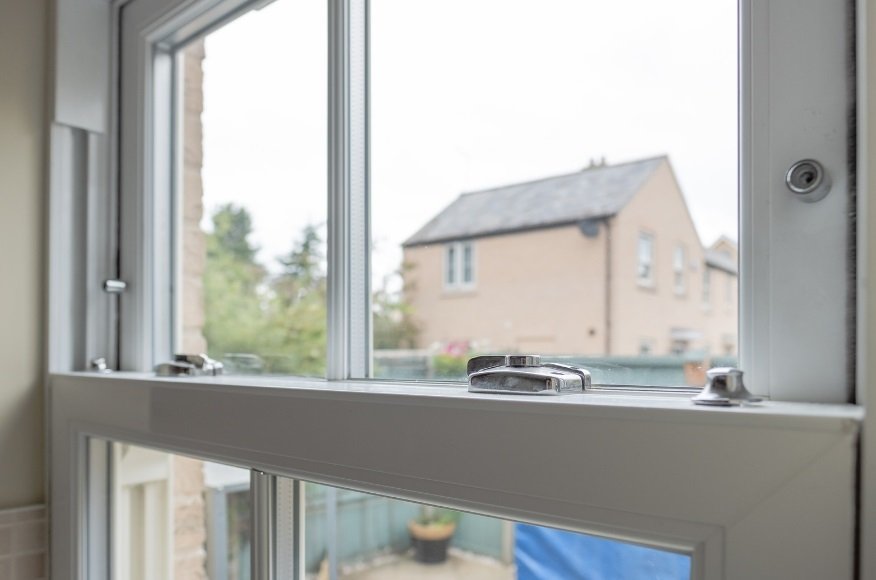
Old sash windows often contain more than a pane of glass. The glass, putty, timber rebate and slender glazing bars work as one weathering system. When one part fails, the correct response is not automatically to remove everything. A careful repair can retain valuable historic material while restoring a secure, weather-resistant finish.
The first step is to establish whether the problem is cracked glass, loose putty, decayed timber or movement within the sash. These faults can look similar from a distance but require different remedies. Treating only the visible symptom may allow water to continue entering behind the repair.
Why older glass is worth assessing
Crown and cylinder glass can have slight ripples, seeds and variations in thickness that give older elevations much of their visual life. These characteristics are not defects. When sound, the pane may be worth retaining even if the surrounding putty has become brittle. Matching historic glass is difficult, so unnecessary removal can permanently alter the appearance of the window.
Before work begins, the pane should be inspected in good light. Small surface marks differ from cracks that compromise safety or weather tightness. The position of the window, the use of the room and any applicable safety-glazing requirements also influence whether retention is appropriate.
Putty failure and timber decay
Traditional linseed-oil putty sheds water away from the glass and protects the edge of the pane. Over time it can crack, shrink or detach from the timber. Localised failure may be repaired if the surrounding material remains well bonded, but widespread brittle putty is usually better removed carefully and renewed.
The rebate beneath the putty must be sound. Painting over soft timber or filling decay with a surface compound traps the underlying problem. Specialist sash window glass and putty repairs should include an assessment of the rebate, glazing bars and lower rail so that local timber repairs are completed before reglazing.
When replacement glass is justified
A broken or structurally cracked pane normally requires replacement. Glass may also need to change where it presents a safety risk in a critical location or where an agreed thermal upgrade forms part of a properly designed restoration. The replacement should suit the sash: excessive weight or thickness can affect balance, strain joints and require changes to the counterweights.
Where historic appearance matters, salvaged or reproduction glass may provide a closer visual match than standard modern float glass. The choice should be made pane by pane rather than assuming that every window in the building requires the same intervention.
A careful glazing sequence
Sound preparation is essential. Old putty should be removed with controlled tools and heat, taking care around thin glass and delicate glazing bars. The rebate is repaired, prepared and primed as appropriate before the pane is bedded and secured. New putty is then applied to a clean line that sheds water without covering more glass than necessary.
After curing, the paint system should overlap the edge of the putty slightly to seal the junction. This small detail is frequently missed, yet it is critical to the life of both the putty and the timber below.
Look at the complete window
Glazing work is an ideal opportunity to inspect cords, pulleys, joints, external seals and paint. Correcting these connected defects together is usually more durable than arranging several isolated visits. It also helps ensure that a repaired pane sits within a sash that opens, closes and drains as intended.
The guiding principle is simple: retain sound historic glass where it can continue to perform, replace it where safety or failure makes that necessary, and always repair the surrounding timber and putty as one coordinated system.