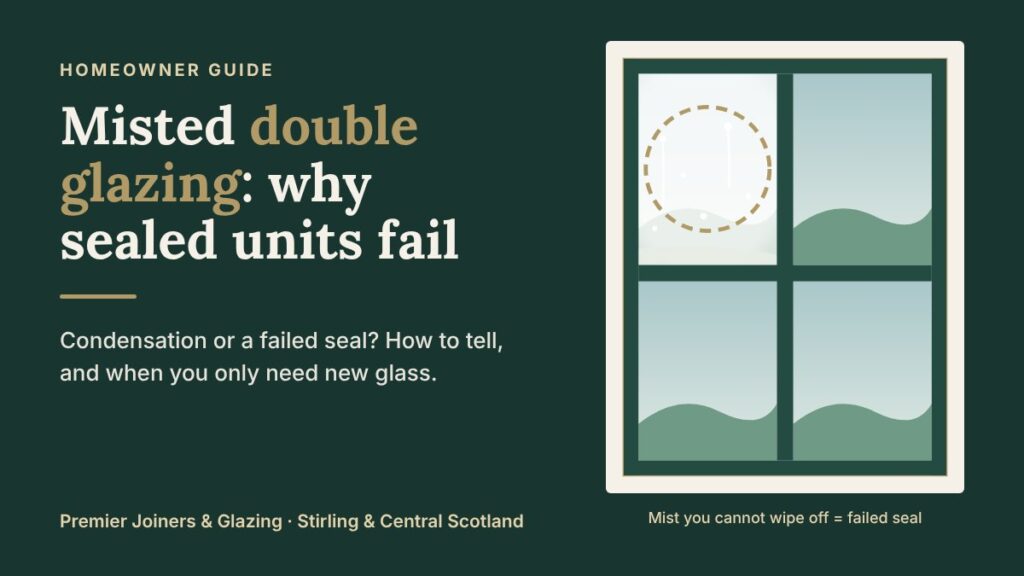
If you have ever wiped a window only to find the fog is still there, the problem is almost certainly inside the glass rather than on it. Misted double glazing is one of the most common glazing faults homeowners run into, and it often leaves people wondering whether they need a whole new window. In many cases they do not. This guide explains what is going on between the panes, how to tell it apart from ordinary condensation, and what your options are if you live in Stirling or elsewhere in Central Scotland.
How a double glazed unit works
A double glazed unit is two panes of glass held apart by a spacer bar that runs around the edge. The gap between the panes is sealed, and the spacer usually contains a desiccant, a drying material that soaks up the small amount of moisture trapped when the unit is made. Many modern units also have a gas such as argon in the cavity and a low-emissivity coating on one pane to reduce heat loss.
The whole unit depends on that edge seal. While it holds, the air or gas in the cavity stays dry and the glass stays clear. Once it fails, damp air can work its way in each time the unit warms and cools. Over time the desiccant becomes saturated, stops doing its job, and the moisture has nowhere to go except onto the inside faces of the glass.
Condensation or a failed seal? How to tell
Not every misty window has a failed unit. Before you call anyone, it is worth working out exactly where the moisture is sitting.
- On the room side. Moisture on the inside pane is usually down to humidity from cooking, showers, drying clothes or simply sleeping in a closed room. It wipes off, and better ventilation normally helps.
- On the outside. Dew on the outer pane on a cold, clear morning is common with energy-efficient glass, because less heat escapes through it to warm the outer surface. It clears as the day warms up and is not a fault.
- Between the panes. If you cannot wipe the mist away from either side, the seal has failed. You may also see droplets running down inside the cavity, or a white, chalky film left behind as moisture dries out.
A failed unit will not repair itself. The misting often comes and goes with the weather at first, then appears more often until the glass is cloudy most of the time.
Why sealed units fail
Edge seals do not last forever, and several things can shorten their working life:
- Age. Seals and desiccant gradually wear out, so older units are more likely to fail.
- Heat and sunlight. Glass on south and west-facing walls goes through bigger daily temperature swings, which puts the seal under repeated strain.
- Standing water. If the drainage slots in a frame are blocked, water can sit against the bottom edge of the unit and attack the seal.
- Installation. Units that are not properly supported on packers, or that are fitted under stress, can fail sooner than they should.
- Damage. A knock, a crack or a stone strike can break the seal as well as the glass.
Do you need a whole new window?
Often the answer is no. If the frame is sound, opens and closes properly and is not letting in draughts or water, it is usually possible to replace just the sealed glass unit. A new unit is made to the size of the existing one and fitted into the same frame, which keeps disruption and cost down compared with replacing the whole window. Our page on replacement double glazed units explains how this works.
A full window replacement starts to make more sense when the frame itself is the problem: rotten timber, warped or brittle uPVC, hinges and locks that cannot be repaired, or several units in the same window failing at once. If you are unsure, an honest look at the frame is the first step, and a good glazier will tell you if new glass alone would be money poorly spent.
You may also see “demisting” services advertised, where small holes are drilled into the glass to dry the cavity out. Results vary, and the process does not restore the original seal or any gas fill, so it is worth asking about a replacement unit first.
Older and traditional homes
Many homes in Stirling, Bridge of Allan and Dunblane have traditional timber sash and case windows. These were not designed for thick modern units, and in listed buildings and conservation areas the options for changing the glazing can be restricted. In those homes, slim replacement units or secondary glazing fitted on the inside can improve comfort while keeping the original windows. If your property is listed or in a conservation area, check with your local planning authority before making changes.
Safety glass in the right places
When a unit is replaced, the new glass has to suit where it sits. Glazing in and around doors, and low-level panes close to the floor, generally needs to be toughened or laminated safety glass. If your existing unit pre-dates current standards, the replacement may need to be upgraded. Your glazier should check this and explain it in the quotation.
What to tell your glazier
You can save time, and get a more accurate quotation, by sending a few details when you first get in touch:
- Photographs of the misted window from inside and out, showing the whole frame.
- Which room it is in and which way it faces.
- The frame material: uPVC, timber or aluminium.
- A rough size, and whether the window opens or is fixed.
- Any date marks or stamps on the spacer bar inside the edge of the unit.
- Any paperwork from the original installation, as some units came with a guarantee.
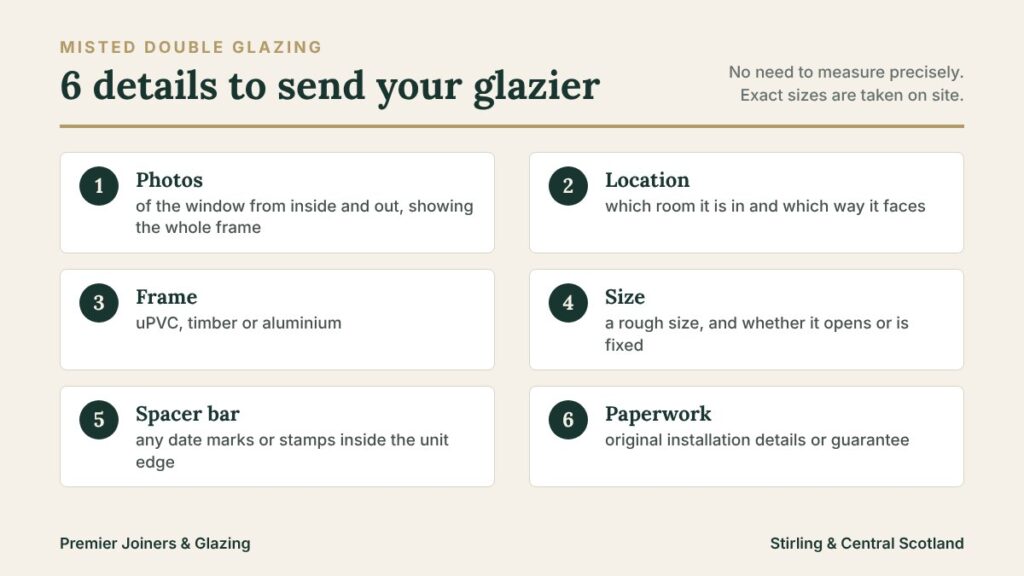
There is no need to take anything apart or measure precisely yourself. The glazier will take exact measurements on site before the new unit is ordered.
Keeping your units clear for longer
A little routine care helps new and existing units last:
- Keep the drainage slots at the bottom of the frame clear of dirt, leaves and paint so water can escape.
- Clean glass and seals with mild soapy water rather than harsh solvents or a pressure washer.
- Ventilate rooms that produce a lot of moisture, especially kitchens and bathrooms.
- Look over your windows once a year for cracked beads, gaps in seals or early signs of misting.
Choosing a local glazier
When a misted window crops up, most people start by searching on their phone and comparing the local businesses that appear on the map. It pays to look past the first result. Check that the business has a real local phone number and a clear service area, read recent reviews from people nearby, and look for photographs of similar work. Ask for a written quotation that says exactly what is being replaced and what glass is being used.
If you have a misted, cracked or damaged unit anywhere in Stirling or Central Scotland, send us a photo and a few details and we will let you know the next step.
About this guide: it was prepared with input from Crowstep Digital, a small web studio near Stirling whose work centres on helping Stirling tradespeople get found online. The advice above is general; for your own windows, ask a glazier to take a look.